
Most people don’t think about their hips until they start to feel stiff, sore, or limited in their movement. But your hips play a central role in almost every activity you do walking, standing, bending, lifting, running, and even maintaining good posture.
When the hips don’t move well, other parts of the body have to compensate, which can lead to pain and dysfunction over time. Improving hip mobility is one of the most effective ways to support long-term joint health and overall movement.
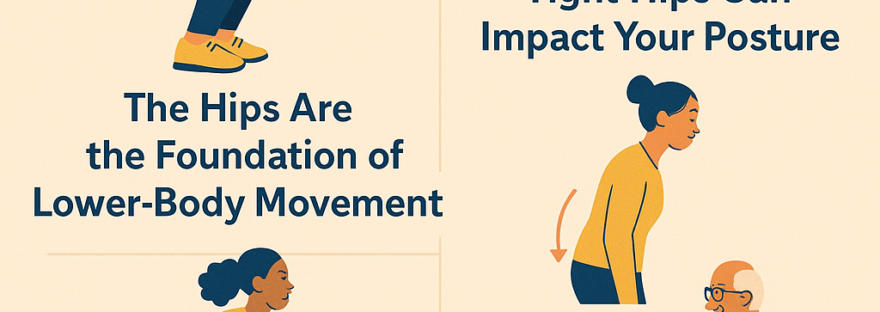
1. The Hips Are the Foundation of Lower Body Movement
Your hips are a major weight-bearing joint, designed to move through multiple planes of motion. When hip mobility is restricted, other areas, especially the lower back, knees, and pelvis start absorbing forces they were never meant to handle.
This often results in:
- Lower back pain
- Knee discomfort
- Tight hamstrings
- Difficulty squatting or bending
- Reduced stability when walking
For many patients we see, improving hip mobility improves overall movement quality.
2. Tight Hips Can Impact Your Posture
Prolonged sitting (work, commuting, screen time) causes the hip flexors to shorten. This tightness gradually pulls the pelvis forward, increasing the arch in your lower back and placing extra strain on surrounding muscles and joints.
Common signs of hip related posture issues include:
- Achy or tight lower back
- Stiffness when standing up
- Fatigue in the hips or legs
- Feeling “tilted forward” when walking
Addressing hip tightness is one of the simplest ways to improve posture without forcing your body into unnatural positions.
3. Mobile Hips Improve Strength and Performance
Strong, healthy movement depends on how well your hips move. Restricted hips can limit the power your glutes, hamstrings, and core can generate.
Good hip mobility improves performance in:
- Running and jogging
- Weightlifting
- Sports and recreational activities
- Daily movements like lifting, bending, climbing stairs
When the hips move properly, the rest of the body functions more efficiently.
4. Hip Mobility Supports Healthy Aging
As we get older, the hips naturally stiffen, especially if we’ve been sitting more, exercising less, or recovering from previous injuries.
Improving hip mobility supports:
- Balance and fall prevention
- Comfortable walking
- Easier daily movement
- Healthy joints and cartilage
- Confidence staying active
Maintaining hip flexibility and strength is one of the best long term investments you can make in your mobility.
5. Physiotherapy Provides Targeted Solutions
A physiotherapist can assess which muscles or joints are contributing to your hip stiffness and create a personalized treatment plan.
Treatment may include:
- Manual therapy to improve joint mobility
- Soft tissue release
- Targeted strengthening
- Mobility and flexibility exercises
- Posture correction strategies
- A simple home program you can maintain easily
Many patients notice improvement within just a few sessions.
Your hips affect far more than you may realize. When they move well, your body feels stronger, more stable, and more comfortable. When they’re stiff, everything around them has to work harder.
If you’re experiencing hip tightness, lower back pain, knee pain, or general stiffness, contact our team at Durham Orthopedic & Sports Injury Clinic to help you restore mobility and move with confidence.
