
You’re Not Just Tired, You’re Tense
Ever notice your neck and shoulders tighten up when you’re stressed? At Durham Orthopedic & Sports Injury Clinic, we constantly see the effects of increased stress on our musculoskeletal system.
The truth is, stress doesn’t just affect your mind, it affects your muscles, too.
1. How Stress Shows Up in Your Body
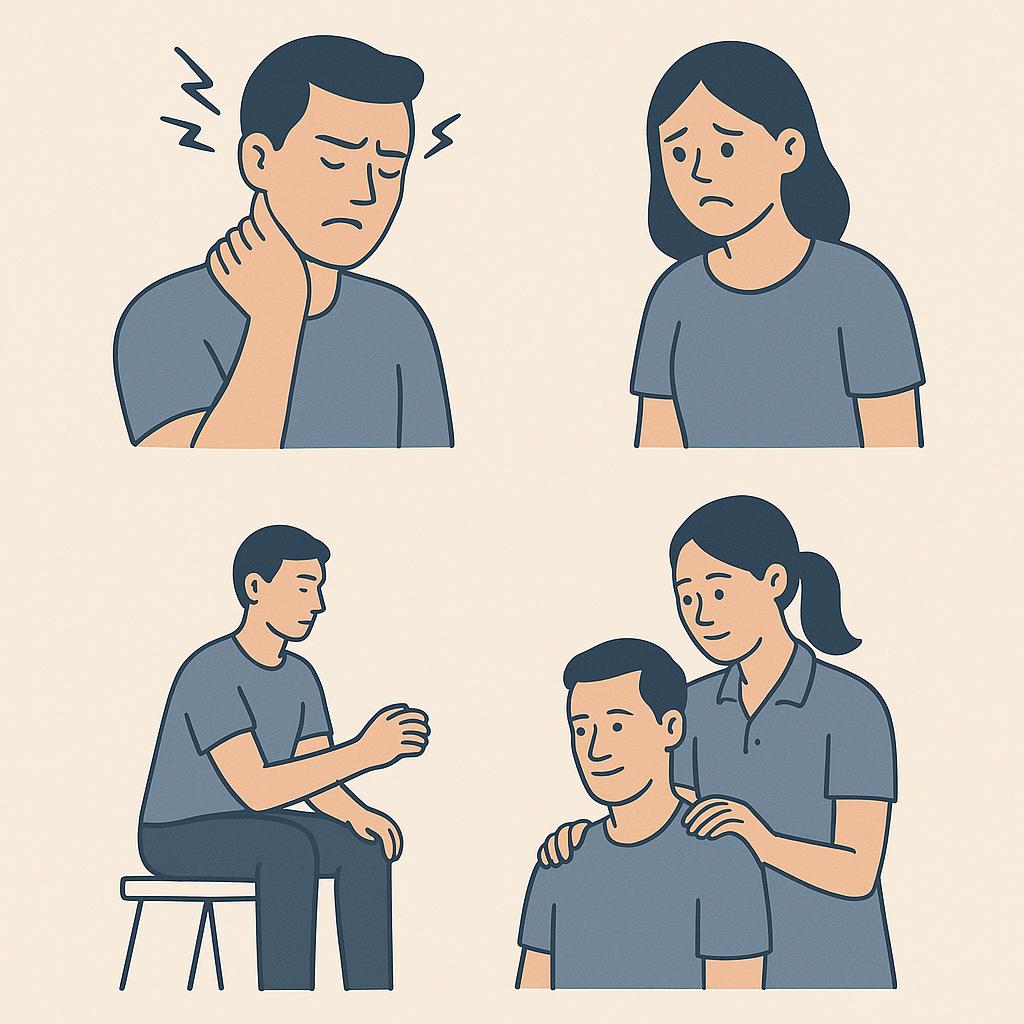
When you’re under stress, your body releases stress hormones like cortisol and adrenaline. These trigger your “fight or flight” response, which causes muscles (especially in the neck, shoulders, and back) to tighten automatically.
That’s great in short bursts, like if you were escaping danger but when stress becomes constant, so does the tension.
Over time, this can lead to:
- Headaches or jaw pain (from clenching)
- Neck and shoulder stiffness
- Low back pain
- Poor posture and fatigue
Your body stays “on alert,” even when you’re just sitting at your desk.
2. Why It Matters
Chronic tension limits your movement and circulation, reducing how well oxygen and nutrients reach your muscles. This makes them more prone to fatigue, knots, and even small strains.
The longer you stay tense, the more your brain starts to expect that tightness, it becomes your “new normal,” which makes recovery harder.
3. How to Break the Cycle
The good news? You can reset that stress-tension loop. Try these simple steps:
- Move every hour. Even light movement signals your body that it’s safe to relax.
- Stretch key areas. Focus on your neck, shoulders, and chest to undo that hunched posture.
- Breathe deeply. Slow, controlled breathing lowers stress hormones and relaxes muscles.
- Stay active. Regular exercise (even walking) helps release tension naturally.
- Unplug. Give your mind a break from screens when possible — mental rest helps physical rest.
4. How Physiotherapy Can Help
Sometimes, tension builds up to the extent that it cannot be released on your own. That’s where physiotherapy comes in.
At Durham Orthopedic & Sports Injury Clinic, our physiotherapists use a combination of manual therapy, targeted stretching, and movement retraining to release tight muscles and restore normal movement patterns.
We also help you recognize the daily habits, posture, breathing, or workstation setup, that keep your body stuck in stress mode.
5. The Bottom Line
Stress is unavoidable. Pain doesn’t have to be.
If you’re feeling tight, tense, or constantly sore, your body might be asking for a reset. Contact the professional physiotherapists at Durham Orthopedic & Sports Injury Clinic. We’ll help you release that tension and get back to feeling like yourself again.
