
Health, Health Tips, Physio

Why Your Hip Mobility Matters More Than You Think

Most people don’t think about their hips until they start to feel stiff, sore, or limited in their movement. But your hips play a central role in almost every activity you do walking, standing, bending, lifting, running, and even maintaining good posture.

When the hips don’t move well, other parts of the body have to compensate, which can lead to pain and dysfunction over time. Improving hip mobility is one of the most effective ways to support long-term joint health and overall movement.

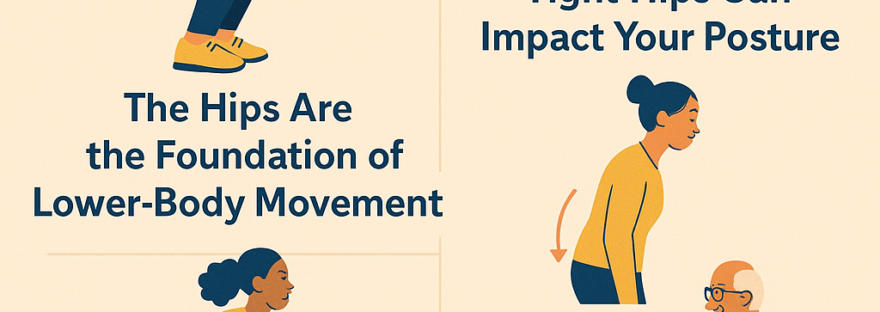
1. The Hips Are the Foundation of Lower Body Movement

Your hips are a major weight-bearing joint, designed to move through multiple planes of motion. When hip mobility is restricted, other areas, especially the lower back, knees, and pelvis start absorbing forces they were never meant to handle.

This often results in:

  • Lower back pain
  • Knee discomfort
  • Tight hamstrings
  • Difficulty squatting or bending
  • Reduced stability when walking

For many patients we see, improving hip mobility improves overall movement quality.

2. Tight Hips Can Impact Your Posture

Prolonged sitting (work, commuting, screen time) causes the hip flexors to shorten. This tightness gradually pulls the pelvis forward, increasing the arch in your lower back and placing extra strain on surrounding muscles and joints.

Common signs of hip related posture issues include:

  • Achy or tight lower back
  • Stiffness when standing up
  • Fatigue in the hips or legs
  • Feeling “tilted forward” when walking

Addressing hip tightness is one of the simplest ways to improve posture without forcing your body into unnatural positions.

3. Mobile Hips Improve Strength and Performance

Strong, healthy movement depends on how well your hips move. Restricted hips can limit the power your glutes, hamstrings, and core can generate.

Good hip mobility improves performance in:

  • Running and jogging
  • Weightlifting
  • Sports and recreational activities
  • Daily movements like lifting, bending, climbing stairs

When the hips move properly, the rest of the body functions more efficiently.

4. Hip Mobility Supports Healthy Aging

As we get older, the hips naturally stiffen, especially if we’ve been sitting more, exercising less, or recovering from previous injuries.

Improving hip mobility supports:

  • Balance and fall prevention
  • Comfortable walking
  • Easier daily movement
  • Healthy joints and cartilage
  • Confidence staying active

Maintaining hip flexibility and strength is one of the best long term investments you can make in your mobility.

5. Physiotherapy Provides Targeted Solutions

A physiotherapist can assess which muscles or joints are contributing to your hip stiffness and create a personalized treatment plan.

Treatment may include:

  • Manual therapy to improve joint mobility
  • Soft tissue release
  • Targeted strengthening
  • Mobility and flexibility exercises
  • Posture correction strategies
  • A simple home program you can maintain easily

Many patients notice improvement within just a few sessions.

Your hips affect far more than you may realize. When they move well, your body feels stronger, more stable, and more comfortable. When they’re stiff, everything around them has to work harder.

If you’re experiencing hip tightness, lower back pain, knee pain, or general stiffness, contact our team at Durham Orthopedic & Sports Injury Clinic to help you restore mobility and move with confidence.

Health, Health Tips, Osteoporosis

OSTEOPOROSIS AND OSTEOARTHRITIS

Despite the fact that osteoporosis, arthritis and osteoarthritis (a form of arthritis) are completely different conditions, they are frequently confused, in particular osteoporosis and osteoarthritis, because both names start with “osteo.”

A FEW BASIC FACTS:

  • Osteoporosis is a bone disease in which the amount and quality of the bone is reduced, leading to fractures (broken bones). Osteoporosis produces no pain or other symptoms unless a fracture has occurred.
  • Arthritis (arth = joint; itis = inflammation) is a disease of the joints and surrounding tissue. Osteoarthritis and rheumatoid arthritis are the most common forms of arthritis.
  • A joint is the location at which two or more bones make contact and allows for movement of the bones.
  • A person can have osteoporosis and osteoarthritis at the same time.
  • Both diseases may cause pain and limit mobility, but the cause of this pain and the way it is treated are quite different.
  • An accurate diagnosis of your pain is very important. With an accurate diagnosis, you will be better able to develop a pain management program that works for you.
  • The prefix “osteo” (which means “bone”) is the only thing that osteoporosis and osteoarthritis have in common.
OsteoporosisOsteoarthritis
DefinitionOsteoporosis is a bone disease. The word “osteoporosis” literally means porous bones. It is a bone disorder characterized by decreased bone strength as a result of reduced bone quantity and quality. A person with osteoporosis has an increased risk of breaking a bone (fracturing) easily.Osteoarthritis is the most common form of arthritis. It is a degenerative joint disease that involves thinning or destruction of the smooth cartilage that covers the ends of bones, as well as changes to the bone underlying the joint cartilage. Osteoarthritis produces pain, stiffness and reduced movement of the affected joint, which ultimately affects ones ability to do physical activities, reducing quality of life.
SymptomsOsteoporosis is called “the silent thief” because it can progress without symptoms until a broken bone occurs. When bones become severely weakened by osteoporosis, simple movements – such as bending over to pick up a heavy bag of groceries or sneezing forcefully – can lead to broken bones. Hip, spine and wrist fractures are the most common fractures associated with osteoporosis.Osteoarthritis most often affects the hips, knees, fingers (i.e., base of the thumb, tips and middle joints of the fingers), feet or spine. It affects each joint differently, and symptoms are easy to overlook. It can be painful – the pain may result from overuse of a joint, prolonged immobility or painful bony growth in finger joints.
DiagnosisOsteoporosis is diagnosed through a bone mineral density test, a simple, painless test that measures the amount of bone in the spine and hip.Osteoarthritis is diagnosed based on medical history, physical examination and x-rays of the affected joints. activities, reducing quality of life.
Risk FactorsThe risk of osteoporosis may be reduced by becoming aware of these risk factors and taking action to slow down bone loss. Low bone mineral density is a major risk factor for fracture, the main consequence of osteoporosis. Other key risk factors include older age, prior low-trauma fracture, a history of falls and use of certain medications, such as corticosteroids (for example, prednisone). Family history of a fragility fracture is often a contributing factor.Learn more about risk factors for osteoporosis. >>Some factors that can contribute to the development of osteoarthritis include family history, physical inactivity, excess weight and overuse or injury of joints.
TreatmentOsteoporosis can be treated with lifestyle changes and, often, the use of prescription medication. Paying attention to diet (adequate calcium and vitamin D intake) and getting regular physical activity are important lifestyle changes. Weight-bearing and strength training exercises can help to manage pain and improve the strength of bones and muscles, which helps to prevent falls. Broken hips caused by osteoporosis usually need to be repaired surgically. This can include the use of specialized “pins and plates,” but can also involve hip replacement surgery. This is determined by the surgeon based on the exact type of hip fracture that has occurred. If you have osteoporosis, there are effective medications that can reduce your risk of fracture.Osteoarthritis can be managed with the use of joint protection (decreasing the amount of work the joint has to do), exercise, pain relief medication, heat and cold treatments, and weight control. Severe arthritis may be treated with an operation, where damaged joints are replaced with an artificial implant. Knee and hip joint replacements are commonly performed.

IF YOU HAVE BOTH DISEASES

Individuals who suffer from osteoarthritis and osteoporosis should seek help planning a program to manage both conditions and pay special attention to advice about exercise.

Regular weight-bearing exercise is usually recommended for individuals with osteoporosis, but may be difficult to follow in the presence of significant hip or knee arthritis. Keeping joints mobile requires a special approach to exercise and movement. A specially trained physiotherapist can help ensure exercises are safe and beneficial for both conditions.

WHERE TO GET HELP

ARTHRITIS

The Arthritis Society (TAS) is the leading source of information on arthritis, including osteoarthritis. For more information about arthritis, contact:

The Arthritis Society
1-800-321-1433
www.arthritis.ca.

OSTEOPOROSIS

Osteoporosis Canada (OC) is the leading source of information on osteoporosis in Canada. OC provides individuals concerned about their risk of developing this disease and those who have been diagnosed with up-to-date information on all aspects of bone health. Our information counsellors on our toll-free line (1-800-463-6842) can also help you to connect with Chapters of Osteoporosis Canada in your area.

Originally Posted By : https://osteoporosis.ca/about-the-disease/what-is-osteoporosis/osteoporosis-and-osteoarthritis/