
We’ve All Been There
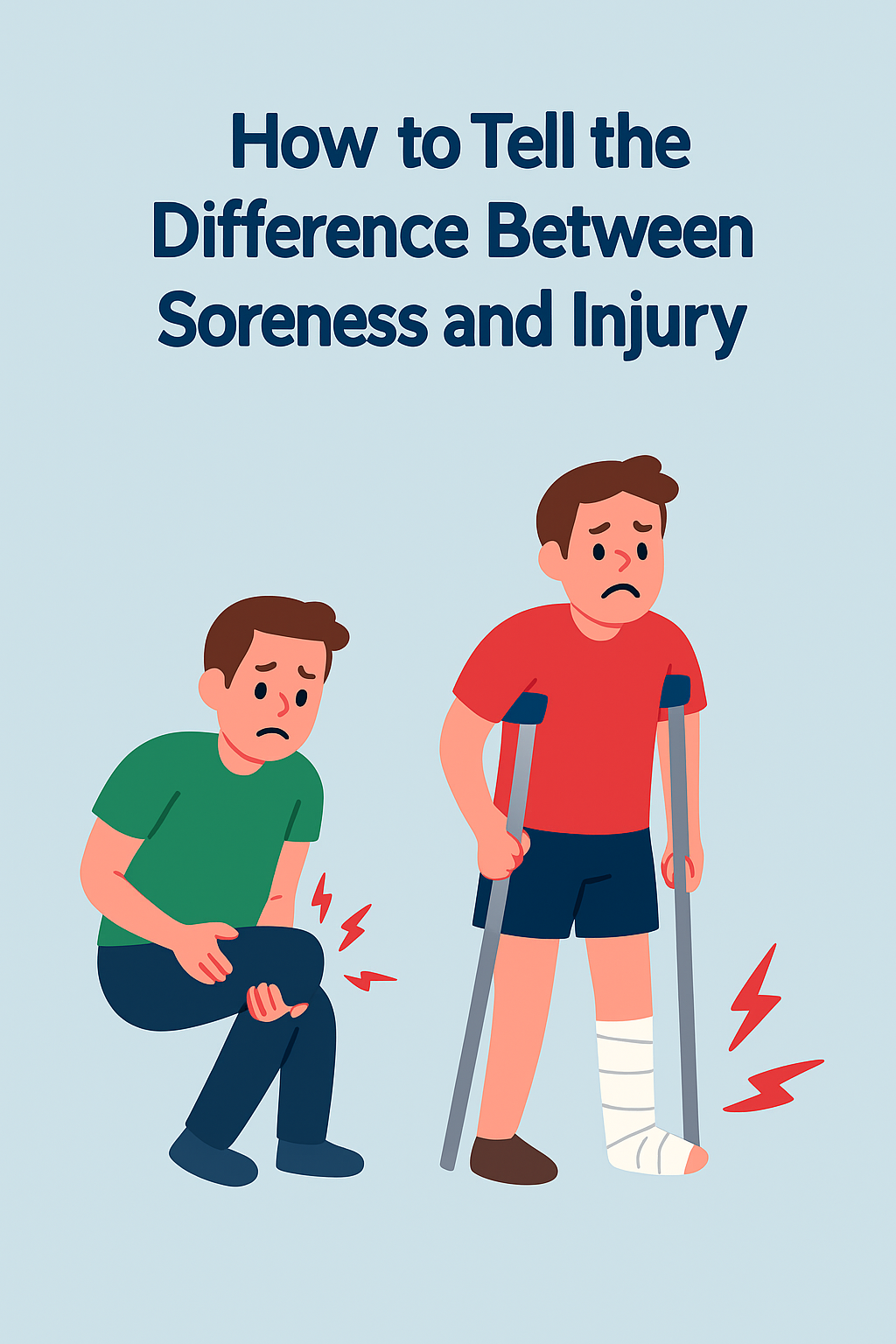
You crush a workout, shovel snow, or spend the weekend tackling home projects and the next morning you wake up sore. But how do you know if it’s harmless muscle soreness or the start of an injury?
The difference matters. Recognizing it early can keep you from losing weeks to unnecessary pain or recovery time.
What Normal Soreness Feels Like (a.k.a. DOMS)
Delayed Onset Muscle Soreness (DOMS) is completely normal. It’s your muscles adapting to new stress. It usually starts 12–24 hours after activity and fades within 2–3 days.
Common signs of soreness:
- Dull, tender ache in the muscles
- Stiffness that improves once you start moving
- Soreness that’s even on both sides
- No swelling or bruising
If it eases up as you warm up, it’s probably just DOMS, your body’s way of saying, “Nice work!”
When It’s More Likely an Injury
Sharp, sudden, or persistent pain is different and it deserves attention.
Watch for these red flags:
- Sharp or stabbing pain during activity
- Swelling or bruising around the area
- Pain that lasts more than 3–4 days
- Pain that worsens instead of improving
- Weakness, instability, or a “pop” sensation
If something felt “off” when it happened, a tweak, pull, or pop, you are likely dealing with an injury, not soreness.
The 3-Day Rule
At Durham Orthopedic & Sports Injury Clinic in Ajax, we use a simple rule of thumb:
If pain hasn’t improved within 3 days, it’s worth getting checked out.
Soreness should loosen up with light movement. Pain that doesn’t, or that starts affecting how you walk, sit, or sleep, needs a closer look from a professional.
How a Physiotherapist Can Help
Physiotherapists are trained to tell the difference between soreness and injury. Through movement tests, palpation, and assessment, we can identify the root cause. Not just where it hurts, but why it hurts.
That means faster recovery, fewer setbacks, and a personalized plan to get you moving confidently again.
How to Prevent Both Soreness and Injury
- Always warm up before activity
- Cool down and stretch after
- Gradually increase your workload
- Stay hydrated
- Listen to your body. Pain is feedback, not failure
Bottom Line
Soreness means you’re adapting. Injury means you’ve gone too far. If you’re unsure which one you’re feeling, don’t wait. Contact us today to book an appointment at Durham Orthopedic & Sports Injury Clinic in Ajax.
Your body gives you signals for a reason and our physiotherapy team is here to help you move better, recover faster, and stay pain free.
