
Pain isn’t one size fits all. Two people can describe pain in the same area, yet the cause and the treatment can be completely different.
Understanding the difference between muscle pain and nerve pain helps explain why some aches respond quickly to rest, while others linger or feel more intense.
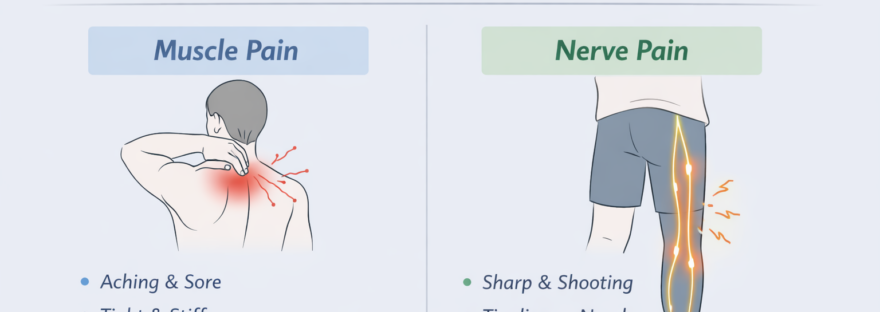
What Muscle Pain Feels Like
Muscle pain usually comes from overuse, strain, or tension. It tends to feel:
- Achy or sore
- Tight or stiff
- Tender to touch
- Worse with movement or prolonged positions
Muscle pain often improves with rest, heat, gentle movement, or stretching.
Common Causes of Muscle Pain
- Muscle strain or overuse
- Poor posture or prolonged sitting
- Sudden increase in activity
- Muscle imbalances or weakness
While uncomfortable, muscle pain is usually straightforward to treat.
What Nerve Pain Feels Like
Nerve pain has a different quality and is often more noticeable. It may feel:
- Sharp, shooting, or burning
- Electric or “zinging”
- Tingling or numb
- Spreading along an arm or leg
Nerve pain can occur even at rest and may worsen at night or in certain positions.
Common Causes of Nerve Pain
- Nerve compression (from joints, discs, or tight tissues)
- Inflammation around a nerve
- Repetitive stress
- Postural strain affecting the spine
Nerve pain often doesn’t respond well to simple rest alone.
Why It Matters to Know the Difference
Treating nerve pain like muscle pain can delay recovery. For example, aggressive stretching or massage may help muscles but can aggravate irritated nerves.
Accurate assessment ensures the right treatment approach from the start.
How Physiotherapy Helps Both Types of Pain
Physiotherapy begins by identifying the source of pain. Treatment may include:
- Manual therapy to reduce tension and pressure
- Targeted exercises to restore movement and strength
- Postural and movement corrections
- Education on activity modification
The goal is to calm irritation, restore normal movement, and prevent symptoms from returning.
When to Get Assessed
It’s a good idea to have pain evaluated if you experience:
- Tingling, numbness, or weakness
- Pain that travels down an arm or leg
- Symptoms that don’t improve with rest
- Night pain that keeps returning
Pain Has a Cause And a Solution
Whether pain comes from muscles or nerves, identifying the source is the key to long term relief. The right treatment makes all the difference. If you are experiencing muscle or nerve pain, contact the physiotherapists at Durham Orthopedic & Sports Injury Clinic.
