
A herniated disc can cause anything from mild back or neck discomfort to pain, numbness, tingling, or weakness that travels into an arm or leg.
For some people, symptoms may make sitting, walking, working, exercising, or even sleeping uncomfortable.
The good news is that a herniated disc does not automatically mean surgery.
Physiotherapy is commonly used as part of conservative treatment for herniated disc symptoms. Treatment may focus on reducing pain, restoring comfortable movement, improving strength, and helping you gradually return to your normal activities.
At Durham Orthopedic & Sports Injury Clinic, our Ajax physiotherapy team can assess your symptoms and develop a treatment plan based on how your condition is affecting your movement and daily life.
What Is a Herniated Disc?
Your spine is made up of individual bones called vertebrae.
Between these bones are discs that help absorb forces and allow your spine to move.
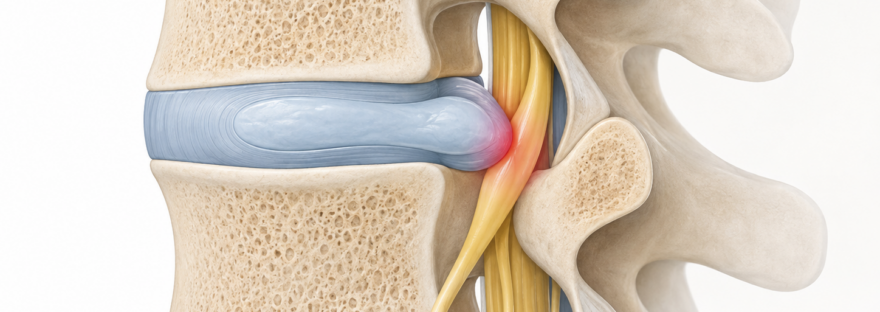
A herniated disc occurs when material inside one of these discs pushes outward through the outer portion of the disc.
A herniated disc may not cause symptoms at all. Problems are more likely when the affected disc irritates or places pressure on a nearby nerve.
Herniated discs can occur in different areas of the spine, but they are particularly common in the lower back and neck.
What Does a Herniated Disc Feel Like?
Symptoms can vary depending on where the disc is located and whether a nearby nerve is affected.
Possible symptoms may include:
- Lower back or neck pain
- Pain travelling into the buttock or leg
- Pain travelling into the shoulder, arm, or hand
- Tingling or pins-and-needles sensations
- Numbness
- Muscle weakness
- Pain that becomes worse with certain movements or positions
- Difficulty sitting or standing comfortably for long periods
A herniated disc in the lower back can sometimes irritate the sciatic nerve and contribute to sciatica symptoms.
Not everyone with back pain has a herniated disc, however, which is why an appropriate assessment is important.
Can Physiotherapy Help a Herniated Disc?
Yes. Physiotherapy may be helpful for many people experiencing pain or movement limitations associated with a herniated disc.
Physical therapy is commonly included in non-surgical treatment and may involve exercises designed to improve movement, strengthen supporting muscles, and reduce pain.
Treatment should be based on your specific symptoms rather than simply following a generic set of back exercises.
Your physiotherapist may assess:
- Where your pain is located
- Whether symptoms travel into an arm or leg
- Your spinal movement
- Strength
- Flexibility
- Nerve-related symptoms
- Positions or movements that improve or worsen symptoms
- How your symptoms affect work, exercise, and everyday activities
This information can help guide an individualized treatment plan.
Improving Movement
When your back or neck hurts, it can be tempting to avoid movement completely.
However, prolonged inactivity is not usually the goal during recovery from uncomplicated back pain or a herniated disc.
Gentle activity and appropriate exercise are commonly encouraged as symptoms improve.
A physiotherapist can help identify movements you can perform comfortably and gradually progress them as your symptoms settle.
The goal is not to force painful movements.
Instead, treatment may focus on gradually restoring confidence and tolerance for activities such as:
- Walking
- Bending
- Sitting
- Standing
- Reaching
- Lifting
- Returning to exercise
Strengthening the Muscles Around Your Spine
Strengthening exercises may also form part of a physiotherapy program.
Depending on your assessment, exercises may target areas such as:
- Core muscles
- Back muscles
- Glutes
- Hips
- Upper back muscles
- Shoulder stabilizers
Improving strength and control can help your body better tolerate the physical demands of work, exercise, and everyday activities.
Your exercises may become progressively more challenging as your movement and symptoms improve.
Stretching and Mobility Exercises
Some people with a herniated disc also develop stiffness or reduced mobility because they have been avoiding uncomfortable movements.
A physiotherapist may prescribe specific stretches or mobility exercises based on how your symptoms respond.
These exercises may help improve your ability to move comfortably without unnecessarily aggravating the affected area.
There is no single stretch that is appropriate for every herniated disc.
Exercises that help one person may irritate another person’s symptoms, which is another reason individualized assessment can be useful.
Returning to Work and Everyday Activities
Herniated disc symptoms can become particularly frustrating when they interfere with work.
Someone who works at a computer may struggle with prolonged sitting, while someone with a physical job may experience difficulty bending, carrying, or lifting.
Physiotherapy can include strategies to gradually increase your tolerance for these activities.
Your physiotherapist may also discuss:
- Changing positions more frequently
- Adjusting your workstation
- Lifting technique
- Breaking demanding tasks into manageable periods
- Gradually returning to exercise or physical work
The goal is to help you safely return to the activities that matter to you.
Will a Herniated Disc Require Surgery?
Many people with herniated disc symptoms can be managed without surgery.
Conservative treatment commonly includes staying appropriately active, medication when recommended by a healthcare professional, and physiotherapy.
However, some cases require further medical evaluation, particularly when there is significant or worsening nerve involvement.
Your healthcare provider can determine whether additional testing, injections, specialist assessment, or surgery should be considered.
When Should You Seek Medical Attention?
Back pain is common, but certain symptoms require prompt medical assessment.
Seek urgent medical attention if back pain is accompanied by symptoms such as:
- New difficulty controlling your bladder or bowels
- Numbness around the groin or saddle area
- Significant or rapidly worsening weakness
- Severe symptoms following a major injury
You should also speak with a healthcare professional if your pain continues to worsen, is significantly limiting your daily activities, or is not improving.
Ajax Physiotherapy for Herniated Disc Symptoms
Living with a herniated disc can make even simple activities uncomfortable.
The right treatment plan can help you understand which movements are safe, gradually rebuild strength, and work toward returning to your normal activities.
At Durham Orthopedic & Sports Injury Clinic, our Ajax physiotherapy team provides individualized assessments and rehabilitation programs for people dealing with back pain, neck pain, sciatica, and other musculoskeletal conditions.
If a herniated disc is interfering with your work, exercise, or everyday life, contact Durham Orthopedic & Sports Injury Clinic to schedule a physiotherapy assessment.
