Back Pain

Can Physiotherapy Help With a Herniated Disc? | Ajax Physiotherapy

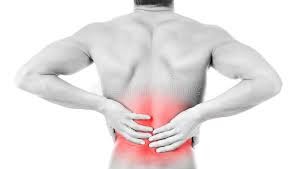
A herniated disc can cause anything from mild back or neck discomfort to pain, numbness, tingling, or weakness that travels into an arm or leg.

For some people, symptoms may make sitting, walking, working, exercising, or even sleeping uncomfortable.

The good news is that a herniated disc does not automatically mean surgery.

Physiotherapy is commonly used as part of conservative treatment for herniated disc symptoms. Treatment may focus on reducing pain, restoring comfortable movement, improving strength, and helping you gradually return to your normal activities.

At Durham Orthopedic & Sports Injury Clinic, our Ajax physiotherapy team can assess your symptoms and develop a treatment plan based on how your condition is affecting your movement and daily life.

What Is a Herniated Disc?

Your spine is made up of individual bones called vertebrae.

Between these bones are discs that help absorb forces and allow your spine to move.

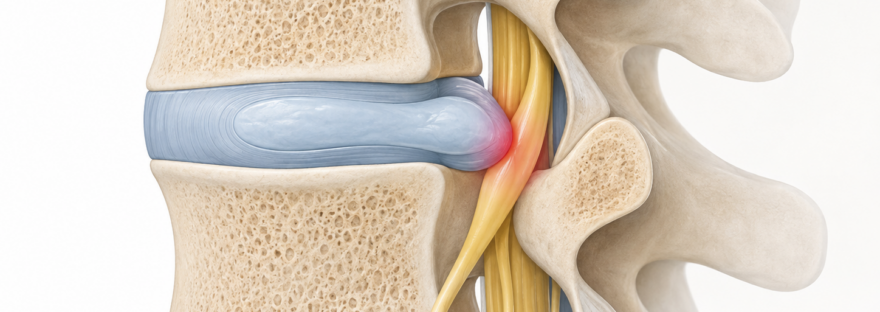
A herniated disc occurs when material inside one of these discs pushes outward through the outer portion of the disc.

A herniated disc may not cause symptoms at all. Problems are more likely when the affected disc irritates or places pressure on a nearby nerve.

Herniated discs can occur in different areas of the spine, but they are particularly common in the lower back and neck.

What Does a Herniated Disc Feel Like?

Symptoms can vary depending on where the disc is located and whether a nearby nerve is affected.

Possible symptoms may include:

  • Lower back or neck pain
  • Pain travelling into the buttock or leg
  • Pain travelling into the shoulder, arm, or hand
  • Tingling or pins-and-needles sensations
  • Numbness
  • Muscle weakness
  • Pain that becomes worse with certain movements or positions
  • Difficulty sitting or standing comfortably for long periods

A herniated disc in the lower back can sometimes irritate the sciatic nerve and contribute to sciatica symptoms.

Not everyone with back pain has a herniated disc, however, which is why an appropriate assessment is important.

Can Physiotherapy Help a Herniated Disc?

Yes. Physiotherapy may be helpful for many people experiencing pain or movement limitations associated with a herniated disc.

Physical therapy is commonly included in non-surgical treatment and may involve exercises designed to improve movement, strengthen supporting muscles, and reduce pain.

Treatment should be based on your specific symptoms rather than simply following a generic set of back exercises.

Your physiotherapist may assess:

  • Where your pain is located
  • Whether symptoms travel into an arm or leg
  • Your spinal movement
  • Strength
  • Flexibility
  • Nerve-related symptoms
  • Positions or movements that improve or worsen symptoms
  • How your symptoms affect work, exercise, and everyday activities

This information can help guide an individualized treatment plan.

Improving Movement

When your back or neck hurts, it can be tempting to avoid movement completely.

However, prolonged inactivity is not usually the goal during recovery from uncomplicated back pain or a herniated disc.

Gentle activity and appropriate exercise are commonly encouraged as symptoms improve.

A physiotherapist can help identify movements you can perform comfortably and gradually progress them as your symptoms settle.

The goal is not to force painful movements.

Instead, treatment may focus on gradually restoring confidence and tolerance for activities such as:

  • Walking
  • Bending
  • Sitting
  • Standing
  • Reaching
  • Lifting
  • Returning to exercise

Strengthening the Muscles Around Your Spine

Strengthening exercises may also form part of a physiotherapy program.

Depending on your assessment, exercises may target areas such as:

  • Core muscles
  • Back muscles
  • Glutes
  • Hips
  • Upper back muscles
  • Shoulder stabilizers

Improving strength and control can help your body better tolerate the physical demands of work, exercise, and everyday activities.

Your exercises may become progressively more challenging as your movement and symptoms improve.

Stretching and Mobility Exercises

Some people with a herniated disc also develop stiffness or reduced mobility because they have been avoiding uncomfortable movements.

A physiotherapist may prescribe specific stretches or mobility exercises based on how your symptoms respond.

These exercises may help improve your ability to move comfortably without unnecessarily aggravating the affected area.

There is no single stretch that is appropriate for every herniated disc.

Exercises that help one person may irritate another person’s symptoms, which is another reason individualized assessment can be useful.

Returning to Work and Everyday Activities

Herniated disc symptoms can become particularly frustrating when they interfere with work.

Someone who works at a computer may struggle with prolonged sitting, while someone with a physical job may experience difficulty bending, carrying, or lifting.

Physiotherapy can include strategies to gradually increase your tolerance for these activities.

Your physiotherapist may also discuss:

  • Changing positions more frequently
  • Adjusting your workstation
  • Lifting technique
  • Breaking demanding tasks into manageable periods
  • Gradually returning to exercise or physical work

The goal is to help you safely return to the activities that matter to you.

Will a Herniated Disc Require Surgery?

Many people with herniated disc symptoms can be managed without surgery.

Conservative treatment commonly includes staying appropriately active, medication when recommended by a healthcare professional, and physiotherapy.

However, some cases require further medical evaluation, particularly when there is significant or worsening nerve involvement.

Your healthcare provider can determine whether additional testing, injections, specialist assessment, or surgery should be considered.

When Should You Seek Medical Attention?

Back pain is common, but certain symptoms require prompt medical assessment.

Seek urgent medical attention if back pain is accompanied by symptoms such as:

  • New difficulty controlling your bladder or bowels
  • Numbness around the groin or saddle area
  • Significant or rapidly worsening weakness
  • Severe symptoms following a major injury

You should also speak with a healthcare professional if your pain continues to worsen, is significantly limiting your daily activities, or is not improving.

Ajax Physiotherapy for Herniated Disc Symptoms

Living with a herniated disc can make even simple activities uncomfortable.

The right treatment plan can help you understand which movements are safe, gradually rebuild strength, and work toward returning to your normal activities.

At Durham Orthopedic & Sports Injury Clinic, our Ajax physiotherapy team provides individualized assessments and rehabilitation programs for people dealing with back pain, neck pain, sciatica, and other musculoskeletal conditions.

If a herniated disc is interfering with your work, exercise, or everyday life, contact Durham Orthopedic & Sports Injury Clinic to schedule a physiotherapy assessment.
Uncategorized

Can Massage Therapy Help Knee Pain?

If you’re dealing with knee pain, your first thought might be that the joint itself is damaged.

But in many cases, knee pain isn’t only about the knee.

Tight muscles in the quadriceps, hamstrings, calves, or IT band can increase stress on the joint and change how it moves. When surrounding tissues become tight or overworked, discomfort often follows.

Massage therapy can play an important role in reducing that tension and supporting recovery.

How Massage Therapy Can Reduce Knee Pain

Massage therapy may help by:

  • Reducing muscle tightness around the knee
  • Improving circulation to irritated tissues
  • Decreasing stiffness
  • Supporting recovery after workouts
  • Helping manage flare-ups

For many patients, knee pain improves when muscle tension is addressed alongside strengthening.

When Massage Is Most Helpful

Massage therapy is especially useful when knee pain is linked to:

  • Tight quadriceps
  • IT band irritation
  • Calf tightness
  • Overuse from sports or gym training
  • Muscle soreness after increased activity

If your knee feels stiff, tight, or achy rather than unstable or severely swollen, massage may provide meaningful relief.

When Massage Alone May Not Be Enough

Massage therapy is excellent for soft tissue tension, but it doesn’t correct underlying weakness or joint mechanics.

These may include such issues as:

  • Arthritis
  • Meniscus irritation
  • Ligament instability
  • Poor hip or ankle mechanics

Massage vs Physiotherapy for Knee Pain

Massage focuses on:

  • Muscle relaxation
  • Circulation
  • Soft tissue release

Physiotherapy focuses on:

  • Strengthening
  • Joint mechanics
  • Movement retraining
  • Long-term correction

What to Expect During a Massage for Knee Pain

Your Registered Massage Therapist may assess:

  • Quadriceps tension
  • Hamstrings
  • Calf muscles
  • IT band
  • Hip mobility

Treatment typically avoids direct pressure on inflamed joints and instead focuses on surrounding tissues. After treatment, mild soreness is normal, but you should feel improved mobility and reduced tightness.

At-Home Tips to Support Knee Relief

Stay active within pain limits
Stretch quads and calves gently
Strengthen glutes and the muscles of the hip joint
Ice after flare-ups
Avoid deep painful movements temporarily until the pain improve

Massage works best when paired with smart movement.

When Should You Seek an Assessment?

Book an appointment if:

  • Pain lasts more than 2–3 weeks
  • You notice swelling or instability
  • Pain interferes with stairs or walking
  • Knee discomfort keeps returning

Early care prevents chronic compensation patterns.

Massage Therapy for Knee Pain in Ajax

If knee pain is limiting your workouts, workday, or daily activities, massage therapy at Durham Orthopedic Clinic may help reduce muscle tension and support recovery.

Contact us today for an assessment to determine whether massage alone is appropriate or whether combining it with physiotherapy will provide better long-term results.

Staying active and pain-free is possible with the right plan.

Uncategorized

Hip, Wrist, and Shoulder Injuries After Ice Related Falls

Winter slips happen fast. One second you’re walking, the next you’re on the ground wondering what just happened.

Ice related falls are one of the most common causes of injury during winter, and they don’t just affect older adults. We regularly see active adults, workers, runners, and parents injured after a simple slip on icy sidewalks, driveways, or parking lots.

The tricky part? These injuries don’t always feel serious right away. Pain can show up days later or quietly linger until it starts interfering with daily life.

Why Ice Related Falls Cause These Injuries

When you slip on ice, your body reacts instinctively. You try to catch yourself, twist away, or brace for impact, often all at once.

That sudden, uncontrolled movement puts stress on areas that aren’t prepared to absorb force, especially the hips, wrists, and shoulders.

Unlike sports injuries where the body may be warmed up and moving predictably, winter falls usually happen:

  • Without warning
  • With poor footing
  • In awkward positions

This combination increases the risk of strain, joint irritation, and even fractures.

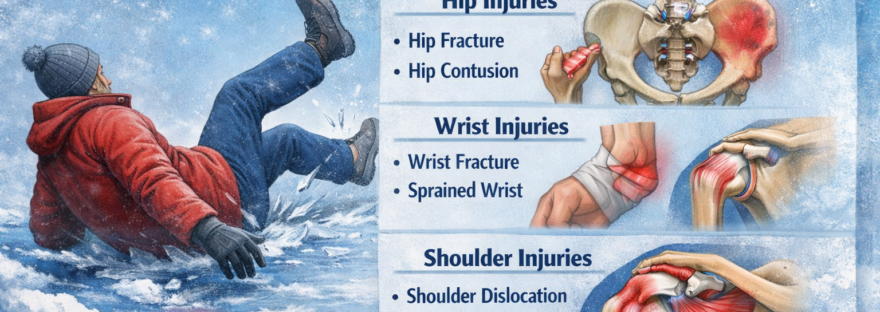
Hip Injuries After a Fall

The hips take a lot of force during a slip, especially if you land sideways or twist as you fall.

Common hip related issues we see include:

  • Deep hip or groin pain
  • Bruising and stiffness
  • Difficulty walking or climbing stairs
  • Pain that worsens after sitting or standing too long

Sometimes the pain isn’t directly in the hip joint itself. Muscles, tendons, or surrounding structures may be overloaded, leading to lingering discomfort if not addressed properly

Wrist Injuries: The Natural “Catch”

Most people instinctively put their hands out to break a fall. Unfortunately, the wrist isn’t designed to absorb your full body weight suddenly.

Common wrist injuries after ice-related falls include:

  • Wrist sprains or strains
  • Ligament irritation
  • Tendon inflammation
  • Fractures (especially with more forceful falls)

Even if X-rays show no fracture, wrist pain can persist if swelling, stiffness, or loss of strength isn’t properly managed.

Shoulder Injuries From Bracing or Impact

Shoulder injuries often happen when someone lands on an outstretched arm or shoulder.

Symptoms can include:

  • Pain when lifting the arm
  • Night pain when lying on the affected side
  • Weakness or instability
  • Limited range of motion

Because the shoulder relies heavily on muscle coordination, even a minor fall can disrupt how the joint moves, leading to pain that sticks around longer than expected.

Why These Injuries Can Linger

One of the biggest frustrations after a winter fall is that pain doesn’t always improve on its own.

Common reasons symptoms linger include:

  • Loss of strength after injury
  • Joint stiffness and reduced mobility
  • Altered movement patterns to “protect” the area
  • Returning to activity too quickly

Pain may settle initially, but without restoring strength, control, and tolerance, the injury often resurfaces during normal daily activities.

How Physiotherapy Helps After a Winter Fall

Physiotherapy focuses on more than just pain relief.

Treatment after an ice-related fall often includes:

  • Assessing how the joint and surrounding muscles are moving
  • Restoring strength and mobility safely
  • Improving balance and coordination
  • Gradually reintroducing daily and work activities
  • Preventing future falls and repeat injuries

Addressing the injury early helps reduce the risk of chronic pain and recurring flare-ups.

When to Seek Physiotherapy After a Fall

You should consider physiotherapy if:

  • Pain hasn’t improved after a few days
  • You notice stiffness, weakness, or limited movement
  • Daily tasks feel harder than before
  • Pain returns when you try to be active again

Ignoring these signs can lead to longer recovery times and unnecessary setbacks.

Ice related falls may seem minor at first, but hip, wrist, and shoulder injuries can quietly turn into long-term issues if left untreated.

Early assessment, proper movement, and gradual strengthening can make the difference between a quick recovery and months of frustration.

If you’ve had a fall this winter and something doesn’t feel right, contact the team at Durham Orthopedic & Sports Injury Clinic to help assess the injury and guide you back to confident, pain free movement.

Back Pain, Health Tips, Physio

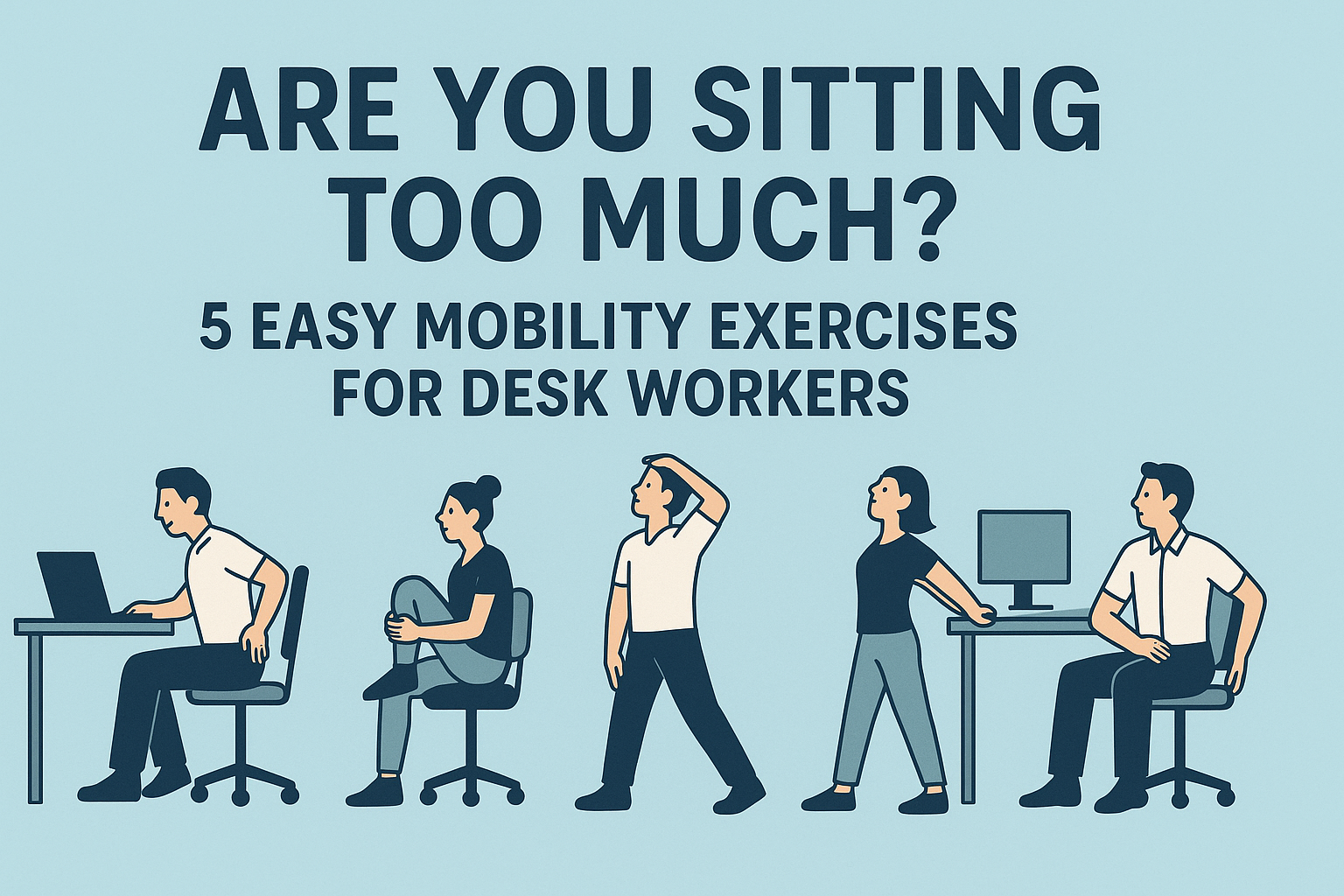
Are You Sitting Too Much? 5 Easy Mobility Exercises for Desk Workers

We Get It,  Sitting All Day Hurts

If you spend most of your day at a desk, chances are you’ve felt it, that dull ache in your lower back, stiff neck, or tight hips that just won’t quit.
At Durham Orthopedic & Sports Injury Clinic, we see this every week, hardworking people across Ajax, Pickering, Whitby, and Oshawa dealing with pain caused by long hours of sitting.

The good news? A few quick mobility exercises can make a huge difference in how your body feels and performs throughout the day.

1. The Hip Opener (90/90 Stretch)

Why it helps: Sitting tightens your hip flexors and limits rotation, which can affect your back and posture.
How to do it:

  • Sit on the floor with one leg in front (knee bent at 90°) and the other leg behind you (also bent 90°).
  • Keep your back straight and slowly lean forward over your front leg.
  • Hold for 30 seconds per side.

2. Shoulder Blade Squeeze

Why it helps: Sitting slouched rounds your shoulders and weakens postural muscles.
How to do it:

  • Sit tall with your feet flat on the floor.
  • Squeeze your shoulder blades together (as if trying to pinch a pencil).
  • Hold for 5 seconds, relax, and repeat 10–12 times.

    Strengthening your upper back can help to improve posture and reduce neck tension.

3. Seated Leg Extensions

Why it helps: Prevents stiffness in the hamstrings which then decreases stress to the low back.
How to do it:

  • While seated, straighten one leg and hold for 3–5 seconds.
  • Lower and switch legs.
  • Repeat 10–15 times per side.

Even a few sets per hour can reduce that “heavy leg” feeling from sitting too long.

4. Standing Back Extension

Why it helps: Reverses the constant forward bend of sitting and relieves pressure on your lower back.
How to do it:

  • Stand tall, place your hands on your lower back.
  • Gently arch backward, looking up slightly.
  • Hold for 2–3 seconds and repeat 10 times.

You can try this every time you get up to grab coffee, easy habit, big results.

5. Neck Rolls & Chin Tucks

Why it helps: Reduces neck stiffness and tension headaches.
How to do it:

  • Slowly roll your head side to side, keeping movements gentle.
  • Then tuck your chin straight back (like making a double chin).
  • Hold 3 seconds, repeat 8–10 times.

Keeps your neck mobile and improves posture at your workstation.

Make Movement a Habit

It’s not just about one big stretch session,  it’s about consistency.

Try setting a reminder every hour to stand, walk, or do one of these quick movements. Over time, these small breaks improve posture, energy, and productivity.

And if pain or stiffness persists, our team at Durham Orthopedic & Sports Injury Clinic can help identify what’s really going on and create a plan that gets you back to moving comfortably.

About Durham Orthopedic & Sports Injury Clinic

Located in Pickering Village, Ajax, our clinic helps patients with workplace pain, sports injuries, and postural issues through personalized physiotherapy, manual therapy, and exercise programs.

Contact us to book your assessment today and feel the difference movement makes.

Uncategorized

Durham Orthopedic & Sports Injury Clinic for Sciatica Relief

If you’ve ever felt a sharp pain shooting down your lower back, hip, or leg, you might be dealing with sciatica. It’s a common condition and the pain can range from mildly uncomfortable to completely debilitating. The good news? The physiotherapists at Durham Orthopedic & Sports Injury Clinic can help.

What Is Sciatica?

Sciatica isn’t actually a diagnosis on its own, it’s a symptom that happens when the sciatic nerve (the longest nerve in your body) gets irritated or compressed. This often feels like:

  • Sharp or burning pain down one side of the body
  • Tingling or numbness in the leg or foot
  • Weakness when moving the leg
  • Pain that gets worse when sitting for long periods

Common Causes of Sciatica

 Sciatica is often linked to:

  • Herniated or bulging discs
  • Spinal stenosis (narrowing of the spinal canal)
  • Muscle tightness (especially in the glutes and hamstrings)
  • Postural strain from sitting too much
  • Injuries like slips, falls, or sports related trauma

How Physiotherapy Helps Sciatica

At Durham Orthopedic and Sports Injury Clinic, our physiotherapists focus on relieving pain, restoring movement, and preventing flare ups. Treatment may include:

  • Manual therapy: Gentle hands on techniques to reduce nerve irritation and muscle tension.
  • Targeted exercises: To strengthen your core and stabilize your spine.
  • Stretching routines: To release tight muscles around the lower back and hips.
  • Posture & ergonomic advice: Small adjustments to how you sit, work, or sleep can make a big difference.
  • Education: Knowing what movements to avoid (and which to practice) helps prevent sciatica from coming back.

Why Choose Durham Orthopedic & Sports Injury Clinic?

Recovery is faster and safer when your treatment is tailored to your body, your lifestyle, and your pain triggers. Our team at Durham Orthopedic and Sports Injury Clinic have helped countless clients get back to work, sports, and everyday life without that constant nerve pain holding them back.

Don’t Let Sciatica Slow You Down

If sciatica is interfering with your day to day life, physiotherapy is a proven, drug free, and often a surgery preventing solution. Contact us today to book your appointment

Uncategorized

Tips for Back pain

back pain

One of the most common injuries seen in our physiotherapy clinic is low back strain.

Low back pain from an injury can be totally debilitating. Fortunately in most cases, the degree of intense pain often does not correlate with the severity of the problem causing the pain. An example of this is a simple muscle spasm in your low back region can be completely disabling and can put you out of commission for several days.

Often the cause can remain a mystery for the victim of low back pain. Some of the common causes seen at our clinic for that mysterious onset of low back pain are:

  • poor posture
  • poor work ergonomics
  • sudden awkward movements  as seen in various sports 
  • participating in an activity you are not use to, for example, the first big snow shovel in the winter season or hours of gardening at the beginning of spring
  • herniated or ruptured discs( often due to prolonged sitting or bending forward for hours)

There are many different treatments for low back pain but the treatment must address the specific cause of your low back pain. There is not one treatment or set of exercises that treats all back pain. Using ice may help when the injury is acute, in the first 48-72hours. After 72 hours, heat can be used to help decrease the muscle spasm.

Anti-inflammatory medications have also proven helpful to help reduce the inflammation in the acute stage of the injury.

Complete bed rest is no longer indicated for low back pain.  Gentle stretches and easy movements such as walking help speed up the recovery.

Of course, seeing a physiotherapist will help you learn which movements and exercises are best for your specific injury and the hands-on work the physiotherapist can provide will help speed up the recovery.

Have you injured your back and need help to get your day to day life back to normal? Call the professionals at Durham Orthopedic Sports & Injury clinic to get onto your road to recovery today!