
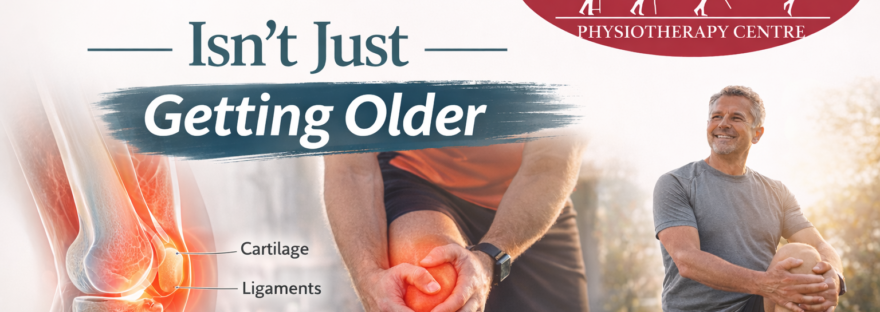
If you’re over 40 and starting to notice knee pain during stairs, workouts, or long walks, it’s easy to assume: “It’s probably arthritis.” While osteoarthritis is common, it’s far from the only reason your knee might be hurting. In fact, many cases of knee pain in adults over 40 are caused by treatable muscle imbalances, tendon irritation, or joint mechanics, not severe joint damage.
The key is understanding the difference.
What Is Knee Osteoarthritis?
Osteoarthritis happens when the cartilage inside the knee joint gradually wears down over time.
Common signs include:
- Morning stiffness that improves with movement
- Gradual onset of pain over months or years
- Aching pain with prolonged walking
- Crunching or grinding sensation
- Mild swelling after activity
Arthritis pain usually develops slowly and progressively.
Other Common Causes of Knee Pain After 40
Many patients in Durham Region are surprised to learn their knee pain is caused by something else entirely.
1️⃣ Meniscus Irritation
Small cartilage cushioning structures in the knee can become irritated or slightly torn, especially after twisting movements.
Signs:
- Pain with twisting
- Catching or locking sensation
- Swelling after activity
2️⃣ Tendinitis (Overuse Injury)
Repetitive stress from running, gym workouts, or sports can irritate the patellar tendon.
Signs:
- Pain just below the kneecap
- Worse with stairs or jumping
- Sharp pain during activity
3️⃣ Muscle Imbalances
Weak hips muscles or glutes can change how the knee tracks during movement.
Signs:
- Pain during squats
- Pain descending stairs
- Pain after long periods of sitting
This is extremely common and very treatable.
Common Mistakes People Make
Stopping all activity
Avoiding strength training
Relying only on anti-inflammatory medication
Waiting until pain becomes severe
The knee often needs smarter loading, not complete rest.
How Physiotherapy Can Help
At Durham Orthopedic Clinic, assessment focuses on:
- Joint mobility
- Muscle strength
- Movement mechanics
- Hip and ankle contribution
- Load tolerance
Treatment may include:
- Targeted strengthening (especially quads and glutes)
- Joint mobilization
- Movement retraining
- Gradual return-to-activity planning
Research consistently shows that structured strengthening is one of the most effective treatments for knee pain, even when arthritis is present.
At Home Tips for Managing Knee Pain
Stay active (within pain limits) Strengthen hips and quads
Avoid deep painful squats temporarily
Use ice after flare-ups
Maintain a healthy body weight
Movement is medicine, when done properly.
When Should You Seek Professional Help?
Book an assessment if you notice:
- Swelling that persists
- Knee instability or giving way
- Pain lasting longer than 2–3 weeks
- Reduced range of motion
- Pain interfering with daily activities
Early treatment prevents long-term compensation patterns.
Knee Pain Treatment in Durham Region
If knee pain is limiting your walks, workouts, or workday, don’t assume it’s “just aging.”
Contact the physiotherapists at Durham Orthopedic Clinic for a proper assessment. We can determine whether it’s arthritis, tendon irritation, meniscus involvement, or a movement issue and create a plan tailored to you.