
Uncategorized

Returning to Running This Spring? 5 Tips to Avoid Knee and Shin Pain

As the weather warms up, many people across Durham Region lace up their running shoes and head back outside. After months of colder weather and reduced activity, it’s common to feel motivated to get moving again.

But returning to running too quickly can often lead to injuries like knee pain, shin splints, or muscle strains.

If you’re planning to start running again this spring, taking a gradual and mindful approach can help you stay active while avoiding setbacks.

Why Running Injuries Are Common in the Spring

One of the biggest reasons injuries occur this time of year is sudden increases in activity.

During the winter months, many people reduce their activity levels or switch to different types of exercise. When spring arrives, runners sometimes jump back into their old routines too quickly.

This can place extra stress on muscles, tendons, and joints that may not be fully conditioned for the workload.

Common spring running injuries include:

  • Patellofemoral syndrome
  • Shin splints
  • Achilles tendon irritation
  • Calf strains
  • IT band syndrome

The good news is that most of these injuries can often be prevented with the right approach.

1. Start Slower Than You Think

One of the most effective ways to avoid injury is to gradually rebuild your running volume.

Even if you were running regularly last year, your body may need time to adapt again.

Try starting with shorter runs and slower pacing during the first few weeks. Increasing distance or intensity gradually helps your muscles and joints adjust to the workload.

2. Don’t Skip Your Warm-Up

Many running injuries occur because muscles are tight or unprepared for movement.

Before heading out, spend a few minutes doing light dynamic movements such as:

  • Leg swings
  • Walking lunges
  • Light jogging
  • Hip mobility exercises

A proper warm-up increases blood flow and prepares your muscles for activity.

3. Pay Attention to Early Signs of Pain

A small ache can sometimes be the first warning sign of a developing injury.

Common early symptoms runners notice include:

  • Knee discomfort when going downstairs
  • Tightness along the front of the shin
  • Persistent calf tightness
  • Hip or outer knee soreness

If pain continues during or after multiple runs, it may be worth getting assessed before the issue becomes more serious.

4. Mix in Strength Training

Strong muscles help support your joints and improve running mechanics.

Exercises that can support runners include:

  • Glute bridges
  • Squats
  • Step-ups
  • Core strengthening

Adding strength training a few times per week can reduce the risk of overuse injuries.

5. Give Your Body Time to Recover

Rest and recovery are essential when increasing activity levels.

Try alternating running days with lower-impact activities like walking, cycling, or mobility work. This allows your tissues time to adapt and recover between sessions.

Sleep, hydration, and proper nutrition also play an important role in injury prevention.

When to Seek Help for Running Pain

If pain persists, worsens, or begins to affect your daily activities, it may be helpful to have a professional assessment.

Physiotherapy can help identify the underlying cause of pain and provide a personalized plan to support recovery and safe return to activity.

Stay Active This Spring

Spring is a great time to get moving again and enjoy outdoor activity throughout Ajax and the Durham Region. With a gradual approach and attention to how your body feels, many common running injuries can be avoided.

If you’re experiencing knee pain, shin splints, or other running-related discomfort, contact the team at Durham Orthopedic & Sports Injury Clinic can help assess the issue and guide your recovery.
Uncategorized

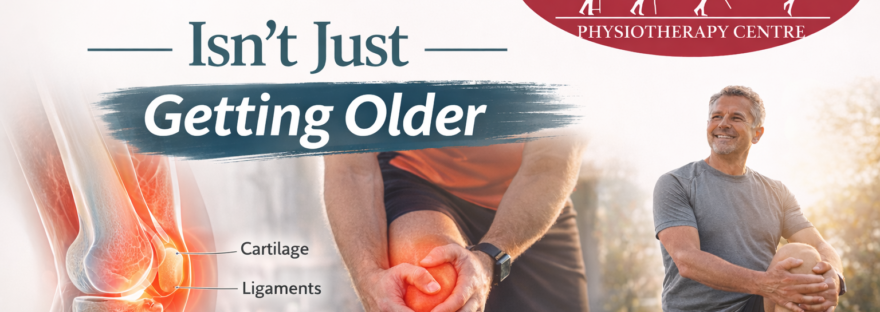
Knee Pain Isn’t Just “Getting Older”

If you’re over 40 and starting to notice knee pain during stairs, workouts, or long walks, it’s easy to assume: “It’s probably arthritis.” While osteoarthritis is common, it’s far from the only reason your knee might be hurting. In fact, many cases of knee pain in adults over 40 are caused by treatable muscle imbalances, tendon irritation, or joint mechanics, not severe joint damage.

The key is understanding the difference.

What Is Knee Osteoarthritis?

Osteoarthritis happens when the cartilage inside the knee joint gradually wears down over time.

Common signs include:

  • Morning stiffness that improves with movement
  • Gradual onset of pain over months or years
  • Aching pain with prolonged walking
  • Crunching or grinding sensation
  • Mild swelling after activity

Arthritis pain usually develops slowly and progressively.

Other Common Causes of Knee Pain After 40

Many patients in Durham Region are surprised to learn their knee pain is caused by something else entirely.

1️⃣ Meniscus Irritation

Small cartilage cushioning structures in the knee can become irritated or slightly torn, especially after twisting movements.

Signs:

  • Pain with twisting
  • Catching or locking sensation
  • Swelling after activity

2️⃣ Tendinitis (Overuse Injury)

Repetitive stress from running, gym workouts, or sports can irritate the patellar tendon.

Signs:

  • Pain just below the kneecap
  • Worse with stairs or jumping
  • Sharp pain during activity

3️⃣ Muscle Imbalances

Weak hips muscles or glutes can change how the knee tracks during movement.

Signs:

  • Pain during squats
  • Pain descending stairs
  • Pain after long periods of sitting

This is extremely common and very treatable.

Common Mistakes People Make

Stopping all activity
Avoiding strength training
Relying only on anti-inflammatory medication
Waiting until pain becomes severe

The knee often needs smarter loading, not complete rest.

How Physiotherapy Can Help

At Durham Orthopedic Clinic, assessment focuses on:

  • Joint mobility
  • Muscle strength
  • Movement mechanics
  • Hip and ankle contribution
  • Load tolerance

Treatment may include:

  • Targeted strengthening (especially quads and glutes)
  • Joint mobilization
  • Movement retraining
  • Gradual return-to-activity planning

Research consistently shows that structured strengthening is one of the most effective treatments for knee pain, even when arthritis is present.

At Home Tips for Managing Knee Pain

Stay active (within pain limits) Strengthen hips and quads
Avoid deep painful squats temporarily
Use ice after flare-ups
Maintain a healthy body weight

Movement is medicine, when done properly.

When Should You Seek Professional Help?

Book an assessment if you notice:

  • Swelling that persists
  • Knee instability or giving way
  • Pain lasting longer than 2–3 weeks
  • Reduced range of motion
  • Pain interfering with daily activities

Early treatment prevents long-term compensation patterns.

Knee Pain Treatment in Durham Region

If knee pain is limiting your walks, workouts, or workday, don’t assume it’s “just aging.”

Contact the physiotherapists at Durham Orthopedic Clinic for a proper assessment. We can determine whether it’s arthritis, tendon irritation, meniscus involvement, or a movement issue  and create a plan tailored to you.

Back Pain, Health Tips, Physio

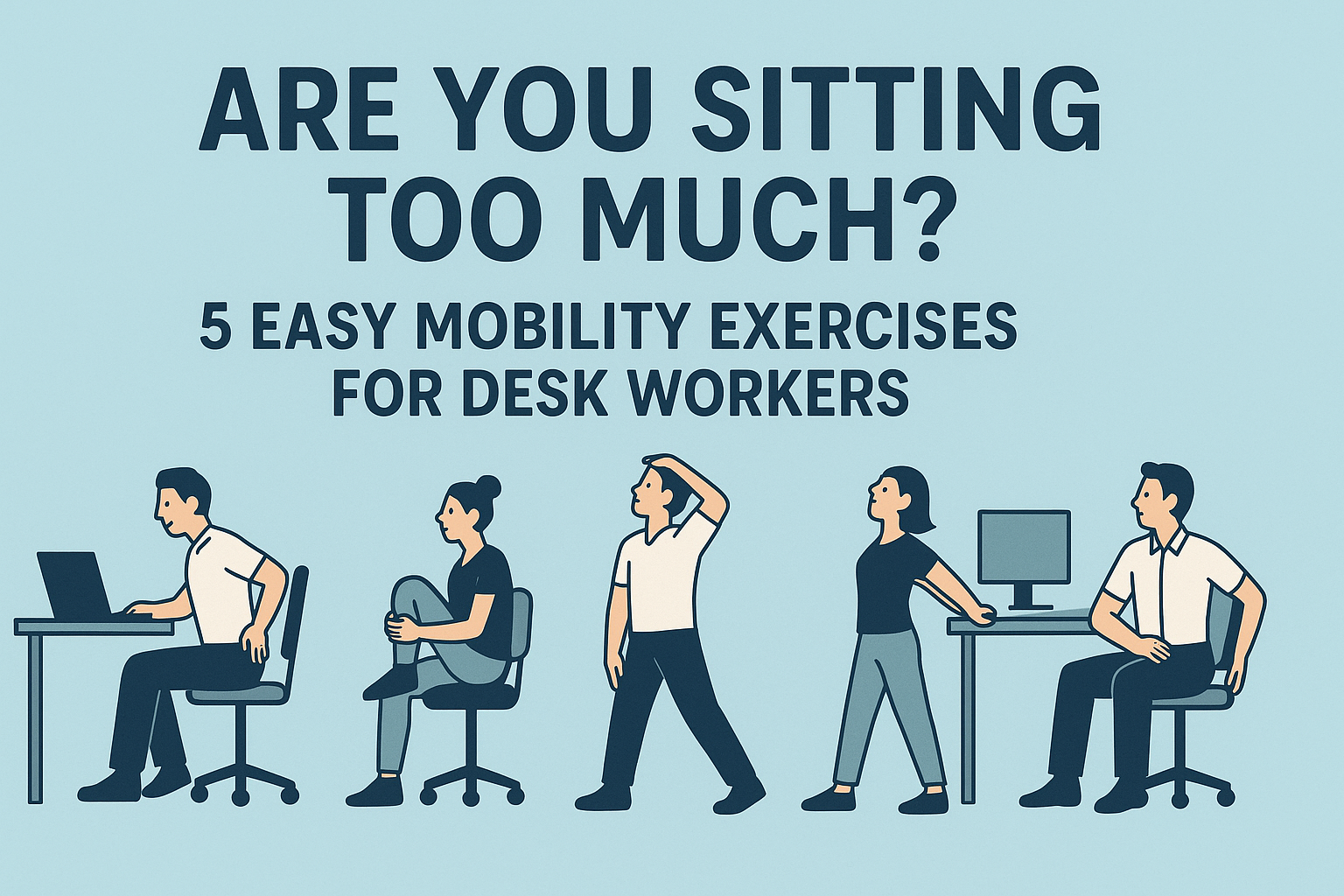
Are You Sitting Too Much? 5 Easy Mobility Exercises for Desk Workers

We Get It,  Sitting All Day Hurts

If you spend most of your day at a desk, chances are you’ve felt it, that dull ache in your lower back, stiff neck, or tight hips that just won’t quit.
At Durham Orthopedic & Sports Injury Clinic, we see this every week, hardworking people across Ajax, Pickering, Whitby, and Oshawa dealing with pain caused by long hours of sitting.

The good news? A few quick mobility exercises can make a huge difference in how your body feels and performs throughout the day.

1. The Hip Opener (90/90 Stretch)

Why it helps: Sitting tightens your hip flexors and limits rotation, which can affect your back and posture.
How to do it:

  • Sit on the floor with one leg in front (knee bent at 90°) and the other leg behind you (also bent 90°).
  • Keep your back straight and slowly lean forward over your front leg.
  • Hold for 30 seconds per side.

2. Shoulder Blade Squeeze

Why it helps: Sitting slouched rounds your shoulders and weakens postural muscles.
How to do it:

  • Sit tall with your feet flat on the floor.
  • Squeeze your shoulder blades together (as if trying to pinch a pencil).
  • Hold for 5 seconds, relax, and repeat 10–12 times.

    Strengthening your upper back can help to improve posture and reduce neck tension.

3. Seated Leg Extensions

Why it helps: Prevents stiffness in the hamstrings which then decreases stress to the low back.
How to do it:

  • While seated, straighten one leg and hold for 3–5 seconds.
  • Lower and switch legs.
  • Repeat 10–15 times per side.

Even a few sets per hour can reduce that “heavy leg” feeling from sitting too long.

4. Standing Back Extension

Why it helps: Reverses the constant forward bend of sitting and relieves pressure on your lower back.
How to do it:

  • Stand tall, place your hands on your lower back.
  • Gently arch backward, looking up slightly.
  • Hold for 2–3 seconds and repeat 10 times.

You can try this every time you get up to grab coffee, easy habit, big results.

5. Neck Rolls & Chin Tucks

Why it helps: Reduces neck stiffness and tension headaches.
How to do it:

  • Slowly roll your head side to side, keeping movements gentle.
  • Then tuck your chin straight back (like making a double chin).
  • Hold 3 seconds, repeat 8–10 times.

Keeps your neck mobile and improves posture at your workstation.

Make Movement a Habit

It’s not just about one big stretch session,  it’s about consistency.

Try setting a reminder every hour to stand, walk, or do one of these quick movements. Over time, these small breaks improve posture, energy, and productivity.

And if pain or stiffness persists, our team at Durham Orthopedic & Sports Injury Clinic can help identify what’s really going on and create a plan that gets you back to moving comfortably.

About Durham Orthopedic & Sports Injury Clinic

Located in Pickering Village, Ajax, our clinic helps patients with workplace pain, sports injuries, and postural issues through personalized physiotherapy, manual therapy, and exercise programs.

Contact us to book your assessment today and feel the difference movement makes.