
Uncategorized

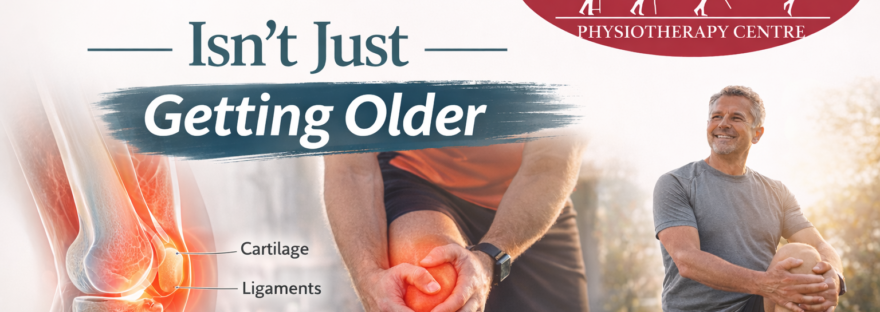
Knee Pain Isn’t Just “Getting Older”

If you’re over 40 and starting to notice knee pain during stairs, workouts, or long walks, it’s easy to assume: “It’s probably arthritis.” While osteoarthritis is common, it’s far from the only reason your knee might be hurting. In fact, many cases of knee pain in adults over 40 are caused by treatable muscle imbalances, tendon irritation, or joint mechanics, not severe joint damage.

The key is understanding the difference.

What Is Knee Osteoarthritis?

Osteoarthritis happens when the cartilage inside the knee joint gradually wears down over time.

Common signs include:

  • Morning stiffness that improves with movement
  • Gradual onset of pain over months or years
  • Aching pain with prolonged walking
  • Crunching or grinding sensation
  • Mild swelling after activity

Arthritis pain usually develops slowly and progressively.

Other Common Causes of Knee Pain After 40

Many patients in Durham Region are surprised to learn their knee pain is caused by something else entirely.

1️⃣ Meniscus Irritation

Small cartilage cushioning structures in the knee can become irritated or slightly torn, especially after twisting movements.

Signs:

  • Pain with twisting
  • Catching or locking sensation
  • Swelling after activity

2️⃣ Tendinitis (Overuse Injury)

Repetitive stress from running, gym workouts, or sports can irritate the patellar tendon.

Signs:

  • Pain just below the kneecap
  • Worse with stairs or jumping
  • Sharp pain during activity

3️⃣ Muscle Imbalances

Weak hips muscles or glutes can change how the knee tracks during movement.

Signs:

  • Pain during squats
  • Pain descending stairs
  • Pain after long periods of sitting

This is extremely common and very treatable.

Common Mistakes People Make

Stopping all activity
Avoiding strength training
Relying only on anti-inflammatory medication
Waiting until pain becomes severe

The knee often needs smarter loading, not complete rest.

How Physiotherapy Can Help

At Durham Orthopedic Clinic, assessment focuses on:

  • Joint mobility
  • Muscle strength
  • Movement mechanics
  • Hip and ankle contribution
  • Load tolerance

Treatment may include:

  • Targeted strengthening (especially quads and glutes)
  • Joint mobilization
  • Movement retraining
  • Gradual return-to-activity planning

Research consistently shows that structured strengthening is one of the most effective treatments for knee pain, even when arthritis is present.

At Home Tips for Managing Knee Pain

Stay active (within pain limits) Strengthen hips and quads
Avoid deep painful squats temporarily
Use ice after flare-ups
Maintain a healthy body weight

Movement is medicine, when done properly.

When Should You Seek Professional Help?

Book an assessment if you notice:

  • Swelling that persists
  • Knee instability or giving way
  • Pain lasting longer than 2–3 weeks
  • Reduced range of motion
  • Pain interfering with daily activities

Early treatment prevents long-term compensation patterns.

Knee Pain Treatment in Durham Region

If knee pain is limiting your walks, workouts, or workday, don’t assume it’s “just aging.”

Contact the physiotherapists at Durham Orthopedic Clinic for a proper assessment. We can determine whether it’s arthritis, tendon irritation, meniscus involvement, or a movement issue  and create a plan tailored to you.
Back Pain, Health Tips, Physio

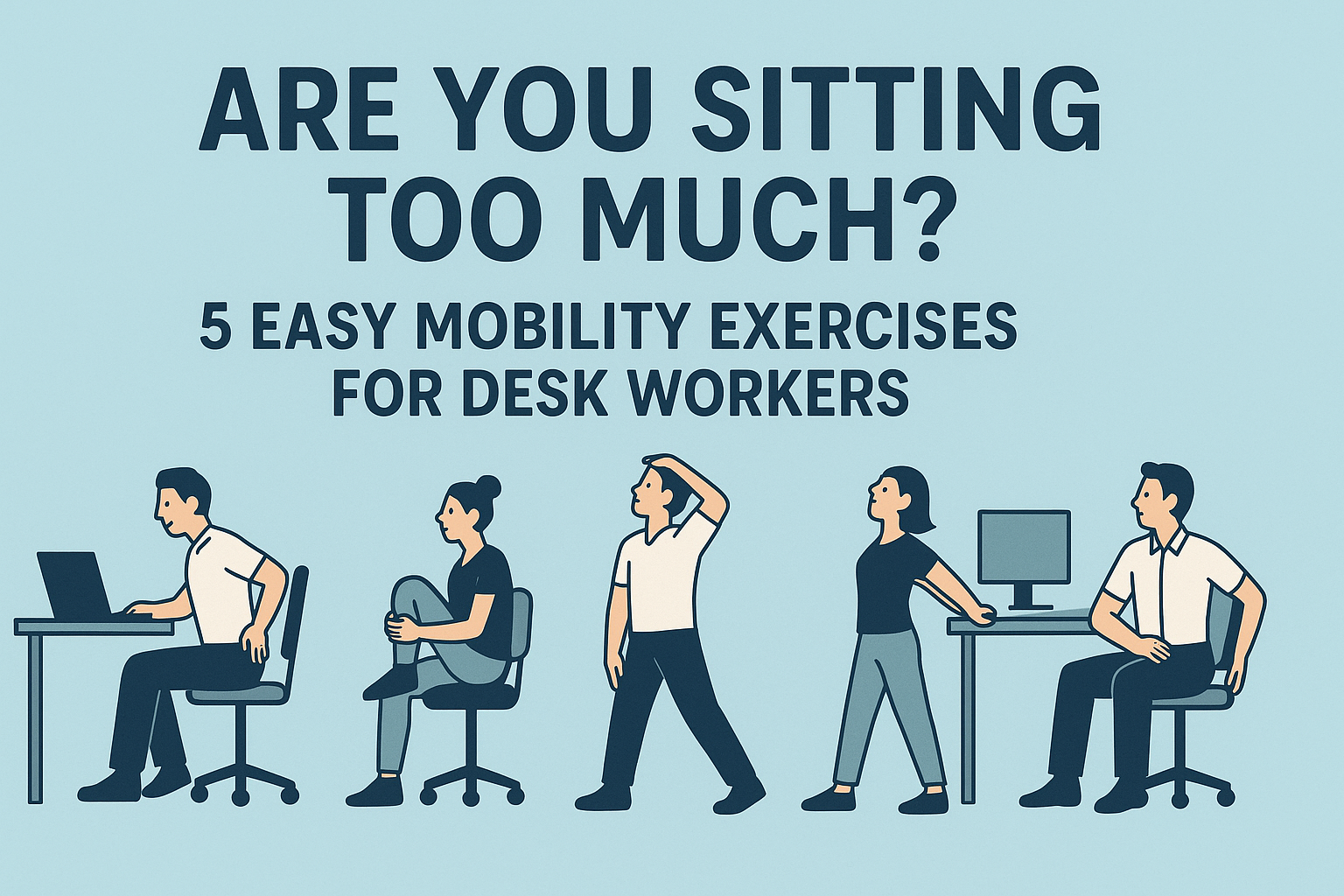
Are You Sitting Too Much? 5 Easy Mobility Exercises for Desk Workers

We Get It,  Sitting All Day Hurts

If you spend most of your day at a desk, chances are you’ve felt it, that dull ache in your lower back, stiff neck, or tight hips that just won’t quit.
At Durham Orthopedic & Sports Injury Clinic, we see this every week, hardworking people across Ajax, Pickering, Whitby, and Oshawa dealing with pain caused by long hours of sitting.

The good news? A few quick mobility exercises can make a huge difference in how your body feels and performs throughout the day.

1. The Hip Opener (90/90 Stretch)

Why it helps: Sitting tightens your hip flexors and limits rotation, which can affect your back and posture.
How to do it:

  • Sit on the floor with one leg in front (knee bent at 90°) and the other leg behind you (also bent 90°).
  • Keep your back straight and slowly lean forward over your front leg.
  • Hold for 30 seconds per side.

2. Shoulder Blade Squeeze

Why it helps: Sitting slouched rounds your shoulders and weakens postural muscles.
How to do it:

  • Sit tall with your feet flat on the floor.
  • Squeeze your shoulder blades together (as if trying to pinch a pencil).
  • Hold for 5 seconds, relax, and repeat 10–12 times.

    Strengthening your upper back can help to improve posture and reduce neck tension.

3. Seated Leg Extensions

Why it helps: Prevents stiffness in the hamstrings which then decreases stress to the low back.
How to do it:

  • While seated, straighten one leg and hold for 3–5 seconds.
  • Lower and switch legs.
  • Repeat 10–15 times per side.

Even a few sets per hour can reduce that “heavy leg” feeling from sitting too long.

4. Standing Back Extension

Why it helps: Reverses the constant forward bend of sitting and relieves pressure on your lower back.
How to do it:

  • Stand tall, place your hands on your lower back.
  • Gently arch backward, looking up slightly.
  • Hold for 2–3 seconds and repeat 10 times.

You can try this every time you get up to grab coffee, easy habit, big results.

5. Neck Rolls & Chin Tucks

Why it helps: Reduces neck stiffness and tension headaches.
How to do it:

  • Slowly roll your head side to side, keeping movements gentle.
  • Then tuck your chin straight back (like making a double chin).
  • Hold 3 seconds, repeat 8–10 times.

Keeps your neck mobile and improves posture at your workstation.

Make Movement a Habit

It’s not just about one big stretch session,  it’s about consistency.

Try setting a reminder every hour to stand, walk, or do one of these quick movements. Over time, these small breaks improve posture, energy, and productivity.

And if pain or stiffness persists, our team at Durham Orthopedic & Sports Injury Clinic can help identify what’s really going on and create a plan that gets you back to moving comfortably.

About Durham Orthopedic & Sports Injury Clinic

Located in Pickering Village, Ajax, our clinic helps patients with workplace pain, sports injuries, and postural issues through personalized physiotherapy, manual therapy, and exercise programs.

Contact us to book your assessment today and feel the difference movement makes.

Health, Health Tips, Osteoporosis

OSTEOPOROSIS AND OSTEOARTHRITIS

Despite the fact that osteoporosis, arthritis and osteoarthritis (a form of arthritis) are completely different conditions, they are frequently confused, in particular osteoporosis and osteoarthritis, because both names start with “osteo.”

A FEW BASIC FACTS:

  • Osteoporosis is a bone disease in which the amount and quality of the bone is reduced, leading to fractures (broken bones). Osteoporosis produces no pain or other symptoms unless a fracture has occurred.
  • Arthritis (arth = joint; itis = inflammation) is a disease of the joints and surrounding tissue. Osteoarthritis and rheumatoid arthritis are the most common forms of arthritis.
  • A joint is the location at which two or more bones make contact and allows for movement of the bones.
  • A person can have osteoporosis and osteoarthritis at the same time.
  • Both diseases may cause pain and limit mobility, but the cause of this pain and the way it is treated are quite different.
  • An accurate diagnosis of your pain is very important. With an accurate diagnosis, you will be better able to develop a pain management program that works for you.
  • The prefix “osteo” (which means “bone”) is the only thing that osteoporosis and osteoarthritis have in common.
OsteoporosisOsteoarthritis
DefinitionOsteoporosis is a bone disease. The word “osteoporosis” literally means porous bones. It is a bone disorder characterized by decreased bone strength as a result of reduced bone quantity and quality. A person with osteoporosis has an increased risk of breaking a bone (fracturing) easily.Osteoarthritis is the most common form of arthritis. It is a degenerative joint disease that involves thinning or destruction of the smooth cartilage that covers the ends of bones, as well as changes to the bone underlying the joint cartilage. Osteoarthritis produces pain, stiffness and reduced movement of the affected joint, which ultimately affects ones ability to do physical activities, reducing quality of life.
SymptomsOsteoporosis is called “the silent thief” because it can progress without symptoms until a broken bone occurs. When bones become severely weakened by osteoporosis, simple movements – such as bending over to pick up a heavy bag of groceries or sneezing forcefully – can lead to broken bones. Hip, spine and wrist fractures are the most common fractures associated with osteoporosis.Osteoarthritis most often affects the hips, knees, fingers (i.e., base of the thumb, tips and middle joints of the fingers), feet or spine. It affects each joint differently, and symptoms are easy to overlook. It can be painful – the pain may result from overuse of a joint, prolonged immobility or painful bony growth in finger joints.
DiagnosisOsteoporosis is diagnosed through a bone mineral density test, a simple, painless test that measures the amount of bone in the spine and hip.Osteoarthritis is diagnosed based on medical history, physical examination and x-rays of the affected joints. activities, reducing quality of life.
Risk FactorsThe risk of osteoporosis may be reduced by becoming aware of these risk factors and taking action to slow down bone loss. Low bone mineral density is a major risk factor for fracture, the main consequence of osteoporosis. Other key risk factors include older age, prior low-trauma fracture, a history of falls and use of certain medications, such as corticosteroids (for example, prednisone). Family history of a fragility fracture is often a contributing factor.Learn more about risk factors for osteoporosis. >>Some factors that can contribute to the development of osteoarthritis include family history, physical inactivity, excess weight and overuse or injury of joints.
TreatmentOsteoporosis can be treated with lifestyle changes and, often, the use of prescription medication. Paying attention to diet (adequate calcium and vitamin D intake) and getting regular physical activity are important lifestyle changes. Weight-bearing and strength training exercises can help to manage pain and improve the strength of bones and muscles, which helps to prevent falls. Broken hips caused by osteoporosis usually need to be repaired surgically. This can include the use of specialized “pins and plates,” but can also involve hip replacement surgery. This is determined by the surgeon based on the exact type of hip fracture that has occurred. If you have osteoporosis, there are effective medications that can reduce your risk of fracture.Osteoarthritis can be managed with the use of joint protection (decreasing the amount of work the joint has to do), exercise, pain relief medication, heat and cold treatments, and weight control. Severe arthritis may be treated with an operation, where damaged joints are replaced with an artificial implant. Knee and hip joint replacements are commonly performed.

IF YOU HAVE BOTH DISEASES

Individuals who suffer from osteoarthritis and osteoporosis should seek help planning a program to manage both conditions and pay special attention to advice about exercise.

Regular weight-bearing exercise is usually recommended for individuals with osteoporosis, but may be difficult to follow in the presence of significant hip or knee arthritis. Keeping joints mobile requires a special approach to exercise and movement. A specially trained physiotherapist can help ensure exercises are safe and beneficial for both conditions.

WHERE TO GET HELP

ARTHRITIS

The Arthritis Society (TAS) is the leading source of information on arthritis, including osteoarthritis. For more information about arthritis, contact:

The Arthritis Society
1-800-321-1433
www.arthritis.ca.

OSTEOPOROSIS

Osteoporosis Canada (OC) is the leading source of information on osteoporosis in Canada. OC provides individuals concerned about their risk of developing this disease and those who have been diagnosed with up-to-date information on all aspects of bone health. Our information counsellors on our toll-free line (1-800-463-6842) can also help you to connect with Chapters of Osteoporosis Canada in your area.

Originally Posted By : https://osteoporosis.ca/about-the-disease/what-is-osteoporosis/osteoporosis-and-osteoarthritis/